
News Briefs | Oct. 7, 2026
October 6, 2026
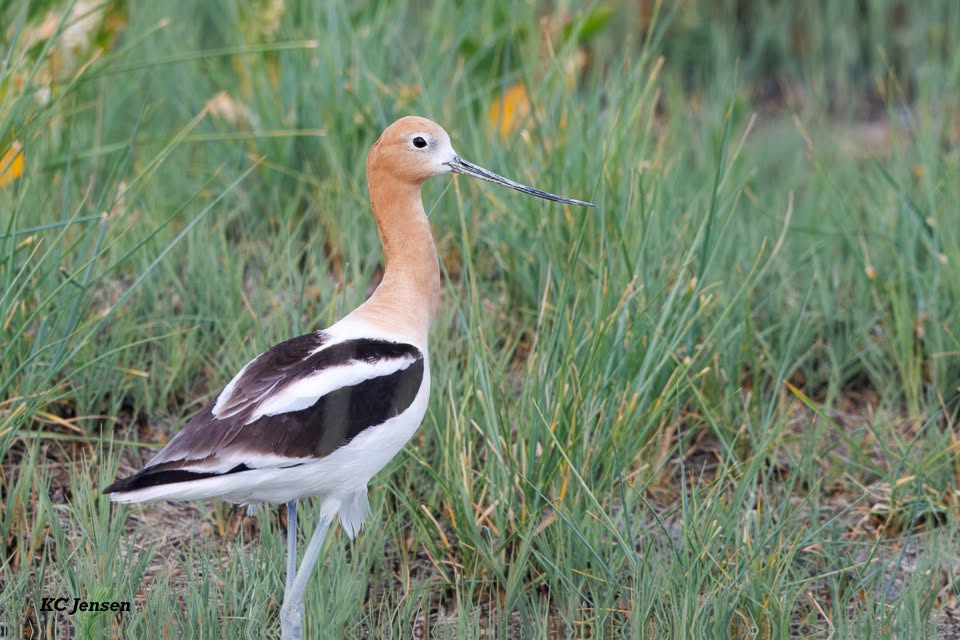
Birding Club meeting set
The Brookings Birding Club will have its October meeting on Wednesday, October 14, 2026, at 7:00 pm in the Larson Nature Center at Dakota Nature Park. Our speaker will be Dr. KC Jensen, a retired Ornithology Professor from SDSU and a widely recognized birding expert.
KC will talk about some of the birds he has seen while conducting bird surveys for the Regenerative Agriculture group, Ecdysis.
Ecdysis is headquartered at Blue Dasher Farm in Estelline, SD, and KC has travelled extensively on their behalf.
Brookings Birding Club meetings are free and open to all interested people. Please bring a friend.
Historic group workshop set
BROOKINGS — The Brookings Historic Preservation Commission will host staff from the South Dakota State Historic Preservation Office for the SHPO Survey Workshop on Saturday, Oct. 10. The event will take place from 11 a.m. to 1:30 p.m. at the Children’s Museum of South Dakota, in the upstairs Community Room. The workshop is free and open to the public.
SHPO staff will lead a presentation and training session for BHPC members and interested public attendees for historic preservation survey training. Following the sit-down presentation and discussion, BHPC members will lead a walking tour through the Central Residential Historic District and the area immediately east of the Central Residential Historic District.
The purpose of this event is to provide training to BHPC members and interested public attendees for proper survey techniques and guidance toward professional surveying strategies and public engagement.
All members of the public are welcome to attend. There are no age restrictions. There is no designated parking for the event, but on-street parking is available in the area.
Attendees are encouraged to check in with the Children’s Museum front desk staff for directions to the Community Room. The Children’s Museum is located at 521 Fourth St. in downtown Brookings.
Questions about the event can be directed to BHPC Chair Matthew Weiss at 605-691-1611 or matthew@designarcgroup.com
Arrests made in field damage case
On Sept. 26, the Brookings County Sheriff’s Office received a report of two pickups driving in the area near 215th St. and 468th Ave, covered in fresh mud.
When a deputy responded to investigate, it was discovered one of the fields previously reported damaged on Sept. 19 had sustained additional damage. A witness recorded the license plates of both muddy pickups, and both drivers were subsequently identified as Alec Tietjen, 21, or Aurora and Hunter Kloos, 26, of Aurora.
During interviews, one driver admitted to driving in the field and stated both pickups had caused the damage, while the second driver denied driving through the field and stated he had only entered the area to turn around.
Both drivers were taken into custody for Intentional Damage greater than $1,000.
Both were booked into the Brookings County Detention Center and later released on PR bonds pending their court appearances on Nov. 2.
Neither driver admitted to involvement in the previously reported damage at this location or damage reported at other locations in the county. The Brookings County Sheriff’s Office continues to investigate these incidents and follow up on reported leads.
Rotary hears from SDSU soccer coach
BROOKINGS — Brookings Rotary Club recently heard from Brock Thompson, Head Coach of South Dakota State University Jackrabbit Women’s Soccer. He was introduced by Toby Uecker, who highlighted Thompson’s emphasis on excellence in the full student-athlete experience — spanning training, travel, and game-day environment — a consistency that has defined all ten seasons Thompson has served as head coach.
SDSU is in its 27th season of soccer, having played 25 of those seasons at Fishback Soccer Park. At Fishback, the team has lost only 34 games.
Thompson is one of only two coaches in program history, having worked under the program’s first coach, Lang Wedemeyer, for eight years before taking over the reins himself.
The program’s foundational philosophy, credited to Wedemeyer and inspired by James Collins’ book, Good to Great, centers on building a relationship-driven culture. The program recognizes consistency through the core value of “True Mental Toughness,” which is working hard, maintaining a great attitude, and treating people well regardless of circumstance. Reflecting its sustained excellence, SDSU is one of only six programs nationally with ten plus wins in each of the last 13 years, alongside Penn State, North Carolina, Georgetown, Florida State, and South Carolina.
Thompson outlined the program’s vision through three pillars: undeniable on-the-field success; unquestioned community support, demonstrated through gestures like delivering season tickets in person and hosting an annual bowl game; and unrivaled championship culture.
Summit League play has just begun.
On October 11, a large group of area middle schoolers will attend a game as part of the program’s community outreach efforts. Homecoming week will bring a rematch against USD, which Thompson described as a season highlight. November 1 will mark Senior Day, a unique occasion this year with only three seniors, down from a typical seven, due to NCAA eligibility rule changes allowing players an extra year of competition.
This season marks the team’s last at Fishback Soccer Park, as the program prepares to move to a new on-campus facility next year. The move brings several benefits, including improved workflow, as the team will have a locker room and room on-site instead of watching game films on campus and then driving to Fishback.
Additionally, the new site will provide better recruiting visibility plus a true Division I game-day facility available year-round.
The new field will feature natural grass, designed by consulting group D.A. Hogan & Associates, who also designed Lambeau Field and the Green Bay Packers’ practice field. The SDSU field is engineered to drain two inches of rain per hour.
Thompson noted that elite programs and recruits generally prefer natural grass over artificial turf, pointing out that Big Ten programs with both men’s and women’s soccer — Michigan State, Michigan, and Wisconsin — all use grass.
Thompson discussed recruiting soccer players, noting that about two-thirds of the roster comes from within four hours of campus, drawing heavily from suburban areas around Minneapolis and Omaha. The program has also welcomed 14 players from Hawaii since 2018, with five currently on the roster, a connection Thompson attributes to shared cultural values around family and community.
Beyond skill, recruiting priorities focus on growth-minded players who are willing to put the team first rather than being outcome- or self-focused; the program does not set formal goals, instead emphasizing the mindset of being “better today than yesterday.” Active recruiting typically begins in June after a player’s sophomore year of high school, though scouting and database-building start earlier.
Regarding scholarships, Thompson noted that the program was previously capped at 14 full scholarships under old NCAA rules; following the House Settlement, roster caps are now set at 28 with no scholarship limit, though SDSU is still operating largely on the old funding model.
Asked about graduate student interest in soccer, Thompson noted SDSU has a men’s club team that plays USD and NDSU, with strong international-student participation.
Farm diesel OK’d
Using farm gas on public roads in South Dakota won’t get anyone in trouble for the foreseeable future.
That’s thanks to a directive from Gov. Larry Rhoden to state law enforcement officials not to enforce dyed diesel regulations that prohibit the use of the tax-exempt fuel on South Dakota and U.S. highways.
In a letter sent to South Dakota Department of Public Safety Sec. Bob Perry, the governor cited high fuel prices in ordering highway inspectors within the state agency to stop enforcing prohibitions on the use of dyed diesel.
“When diesel prices are high, agriculture suffers, transportation costs increase, and consumers pay more for all goods and services,” wrote Gov. Larry Rhoden. “l am directing the Department of Public Safety to adjust enforcement priorities regarding the use of dyed diesel fuel.”
-Dakota Scout