
Pheasant opener: What you need to know
October 13, 2026
By Scott Waltman
South Dakota News Watch
Optimism abounds as one of the biggest annual events in Eastern South Dakota arrives this weekend.
The first day of the traditional pheasant hunting season is Saturday, Oct. 17, and fields across the region are expected to be packed with both pheasants and those hoping to bag them.
Hotels, motels, restaurants and bars will be just as full as thousands of out-of-state hunters will be in the area for what’s something akin to a state holiday across much of South Dakota. Hunting is the state’s No. 2 industry behind agriculture, and the orange carpet will be rolled out accordingly.
It’s expected the number of pheasants will be high after a couple of years of mostly excellent nesting conditions across the state, including around Aberdeen. That has outdoors and tourism-related officials excited, and circumstantial evidence seems to support their optimism. A drive into rural areas during the sunrise and dusk hours usually reveals birds along roadsides gathering food.
Best of luck not only to the many visitors, but also to local residents and landowners, many of whom are responsible for conservation efforts that benefit outdoor activities, as they seek the Chinese ring-necked pheasant, South Dakota’s state bird.
Below is The Insider’s 2026 pheasant hunting primer with just about everything folks need to know about the season — from the cost of licenses to the weekend’s projected weather to entertainment options.
Have fun, be smart, follow all laws and regulations and have a great hunt!
How much are licenses and where can I get them?
Small game licenses that allow pheasant hunting are $36 for South Dakota residents. A residential one-day small game license is $16. A resident youth small game license for hunters 12 to 17 is $5. A $10 habitat stamp is also required for hunters 18 and older.
Nonresident small game licenses are $142 and are good for two five-day periods. Those stretches can be nonconsecutive. A nonresident youth license is $10. A habitat stamp is $25 out-of-staters.
Combination small game and fishing licenses for residents, which are also good for pheasant hunting, are $60 for adults and $44 for senior citizens 65 or older. There are lower fees for people with disabilities and veterans who qualify and are approved.
Licenses can be purchased online or at businesses across South Dakota. Agent fees are charged on some of the licenses.
To purchase a license online, visit gfp.sd.gov/hunt-fish-license/. There are also roughly 280 registered license dealers across South Dakota, including at Wal Mart, Dunham’s and Running’s in Brookings
Electronic small game licenses are accepted. To use one, log in to your South Dakota Department of Game, Fish & Parks licensing account and take a screenshot.
When can pheasant hunting start and what’s the limit on birds?
The pheasant season opens Saturday and runs through Jan. 31, 2027. Shooting is allowed from 10 a.m. until sunset for the entire season.
Three rooster pheasants are allowed each day, with a possession limit of 15 total roosters. It is illegal to shoot hens.
There are more than 5 million acres of private and government land open to public hunting in South Dakota. The overwhelming majority is open to pheasant hunting starting Saturday, though there are a few exceptions in the region.
The state’s Turn In Poachers hotline is 1-888-683-7224. Reports can be made anonymously. Informants are sometimes eligible for rewards. Help sustain the South Dakota pheasant population for years to come by reporting offenders.
Where are the birds?
While GFP doesn’t do brood surveys like it used to, bird numbers are expected to be excellent this fall as the result of excellent nesting conditions across much of the state.
The four counties with the highest reported pheasant harvests a year ago were Brown (75,333), Beadle (69,923), Brule (64,152) and Spink (61,833), according to GFP statistics. Spink is directly south of Brown County.
Last year, 139,641 resident and nonresident hunters bagged an estimated 1.35 million pheasants in South Dakota. That’s roughly 282,500 more than in 2024, according to GFP data.
What about the weather?
It appears the weather for the opening weekend will be pleasant.
The high temperature for Saturday is projected to be around 65, and it will likely be breezy. The high on Sunday, Oct. 18 should be around 70, according to the National Weather Service office in Aberdeen. There’s no rain in the forecast, though the South Dakota weather is always changing.
Hunters should make sure they have sufficient water for not only themselves, but for their dogs. Dogs can get overheated when running through fields for much of the day, especially when the weather is warmer than usual for this time of year.
Longest tail feather contest
For fun, the Aberdeen Area Convention & Visitors Bureau has a longest pheasant tail feather contest that runs through season’s end.
Executive Director Casey Weismantel said hunters are limited to one entry per week. They need to take their feathers to the Convention & Visitors Bureau office at 506 S. Main St. to get them measured. There will be a weekly award for longest feather, he said, with each weekly winner entered into an end-of-season drawing to determine an overall winner.
He said the contest is another way his office hopes to connect with hunters.
More information about the contest can be found online at huntfishsd.com/longest-tail-feather-contest/.
Maps and apps show public hunting areas
Maps showing public access hunting areas are available on the GFP website at gfp.sd.gov/maps.
Smartphone apps are also available for both Androids and iPhones. Search for “Go Outdoors SD” in the respective stores to download the app.
Blaze orange recommended, but not required
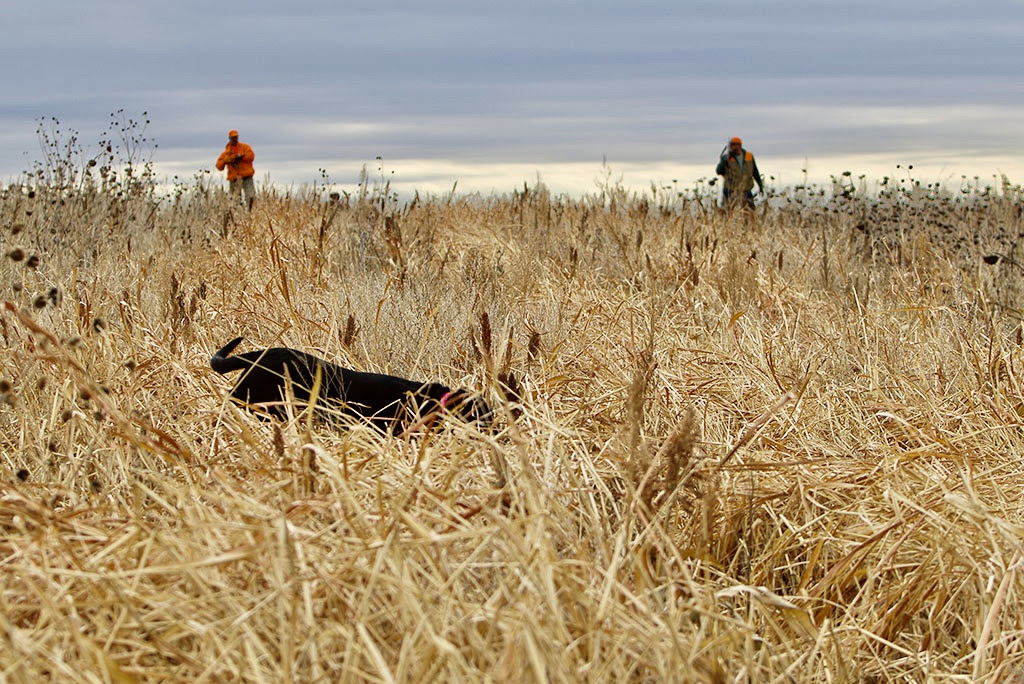
There is no law requiring hunters to wear orange or blaze orange, however it is recommended for safety and so they can be spotted in the fields.
Trespassing on private land not allowed
It is illegal to hunt on private land without permission. Violators could be charged with trespassing. Hunters are allowed to shoot pheasants in most road rights of way. Right-of-way hunters must be on foot. Birds must have taken flight from within or be flying over the right of way. A pheasant shot in a right of way that lands on private land can be retrieved on foot. Hunters are not allowed to discharge firearms from vehicles.