
Promoting free land in Dakota Territory
October 13, 2026
Stubble Mulch
By Chuck Cecil
For The Brookings Beacon
The South Dakota Department of Tourism spends millions each year to entice tourists to visit our state. It’s a good investment.
State officials estimate that about 15 million people visit South Dakota annually, spending in excess of five billion bucks. As an example, the Sturgis Motorcycle Rally this summer attracted nearly half a million souls and probably a dozen or so heels, all of whom paid nearly $1.5 million in South Dakota’s sales tax.
In the very early days before motorcycles, however, the upper Midwest was looking for residents, not tourists. Dakota Territory needed people with gumption to settle here on free land, not just drive through with a stop for coffee and pie at Al’s Oasis in Oacoma and a slug of free ice water at Wall Drug.
Years ago, while many pioneers decided on their own to make a new life for themselves in Dakota Territory, others had to be talked into it by territorial officials and railroads chugging westward.
Promotions sponsored by railroads and the Territorial government wanted to increase the number of settlers needed to bring the population level up to qualify this area for North Dakota and South Dakota statehood—and to help business.
Very often, what prospective settlers heard and read about this area were figments of early promoters’ imaginations with a pinch of chutzpah and some flimflam added to the mix.
Dakota Territory was established in 1861, and the first official effort to bring new residents to Dakota Territory was made in 1865 just after the Civil War ended. The Territorial Legislature in Yankton appointed an immigration agent.
Lawmakers paid the expenses of Immigration Agent Carl Meyer of Yankton to spend two months in his native Denmark working to convince Danes to emigrate to Dakota Territory. He convinced about 40 to make the trip and settle here.
Soon, three members of a newly formed Immigration Board were assigned the job of recruiting residents. They handed out and mailed books and pamphlets extolling Dakota Territory’s virtues and discounting the rumors of cold winters and hot, dry Dakota summers.
Railroads, looking for passengers and freight, also advertised. The free land and opportunities in agriculture were the big selling points. One railroad advertisement extolled:
“Vegetables of all kinds can be raised with little labor and the size they attain is almost marvelous.”
Photos of sod houses labeled “1880” and of three-story brick mansions labeled “1885” were included in immigration flyers, books and posters. Dakota had an exhilarating atmosphere in all seasons, making it a favorite for invalids, the advertisements said.
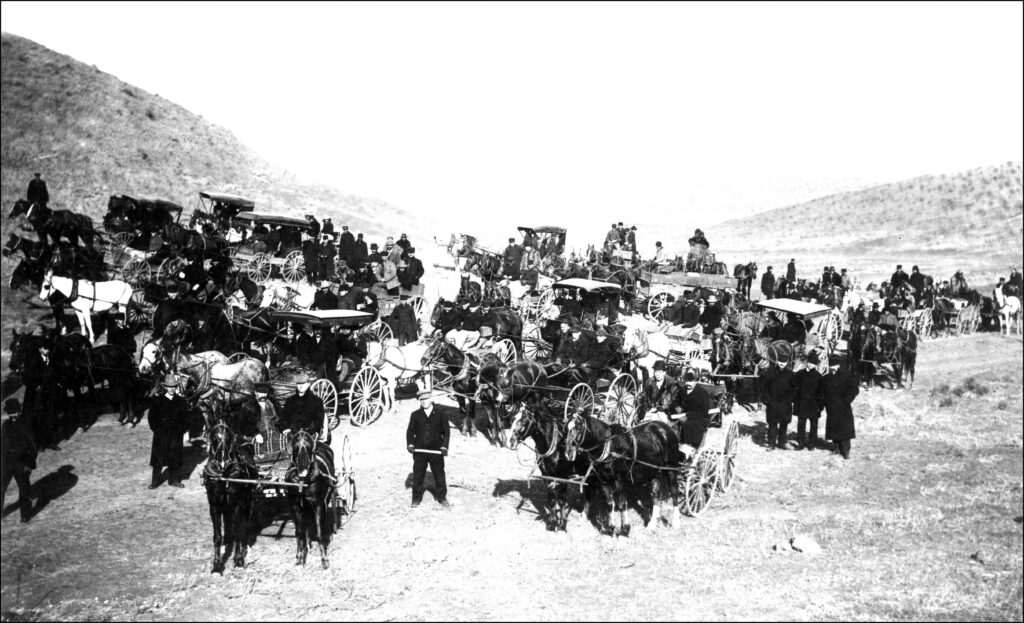
Often, communities and their commercial clubs (today’s Chambers of Commerce) who were interested in attracting settlers to nearby available homestead farmlands, coordinated with the Chicago and North Western’s Dakota Central Railroad, which had a business interest in encouraging homesteaders and offered reduced rail fares to land seekers. Arriving at a host community, land agents and other local businessmen met the train, probably treated the land seekers to a free meal and provided horse and buggy transportation to the nearby acreages of yet unclaimed homestead land.
Dakota’s Immigration Board had no qualms about referring to the “barren wastes of Iowa” and the “desolate plains of Nebraska.” Omaha was described as the “Sodom of Nebraska.” Sioux City was said to be a “den of thieves.”
Whether any of that falderal convinced settlers to come here or go there is difficult to judge. But the Sodom of Nebraska and Iowa’s Den of Thieves did become very large cities.
So Omaha and Sioux City couldn’t have been all that bad. And Deadwood at that time wasn’t exactly the territory’s Heaven on Earth.

Stubble Mulch
By Chuck Cecil
For The Brookings Beacon