
Women helped lead the Reformation
October 6, 2026
By Stuie Lewis
For The Brookings Beacon
It’s officially October, so in the Lutheran world, that means we are gearing up to celebrate Reformation Sunday. The day we remember Luther, his 95 theses, and the changes in the religious world he helped to usher in. This was an important event not just for Lutherans, but denominations all across the spectrum. I believe this event is so important that I created a stanza to a popular song to help me remember it. I’m excited to share this with you. It is sung to the tune of Rudolph the Red Nosed Reindeer.
Are you ready? Here we go.
You know Luther and Knox and Hus and Zwingli. Melanchthon and Wycliffe and Calvin and Tyndale. But do you recall any women at all…
The answer is probably no, and that’s a problem. Women played an extremely important role in the Reformation. The church as we know it today has been shaped by generations of women who worked (mostly in the background unfortunately) to make Christianity accessible and functional for all of God’s children.
Here are a few of my favorites that most of you have probably never heard of. I’ll start with a couple diplomats. First was Marguerite de Navarre. She was the sister of King Francis I of France and used her royal power to protect reformers, including John Calvin, from persecution and burning at the stake. Her religious poems, such as Mirror of the Sinful Soul, spread evangelical ideas throughout the French elite and influenced future English reformers.
Another diplomat would be Joan III of Navarre. Much like her mother Margueritte, she was a champion of Protestant thinking. She became a key political and financial commander for the French Huguenots during the French Wars of Religion, even commissioning the translation of the New Testament into Basque, a commoner language of France and Spain.
There were also female scholars in the Reformation. Olympia Fulvia Morata was fluent in Greek and Latin, which she used to translate Protestant texts into multiple languages and wrote dialogues, essays, and poetry defending Reformed theology before fleeing Italian Inquisition persecution for Germany.
Argula von Grumbach also became known for her writings in this time. When a young Protestant student was arrested at the University of Ingolstadt, Argula wrote a scathing letter to the university faculty challenging them to an open debate based on Scripture. Her letter became a bestselling pamphlet in Germany, making her one of the first published female Protestant writers.
The two most famous women of the Reformation, at least in my eyes, are Katharina Schütz Zell and Katharina von Bora. Katharina Schütz Zell was the wife of Strasbourg pastor Matthew Zell. She became known as a “church mother” and she took on a public ministry of visiting the sick, housing refugees from religious violence, and writing published defenses of her Protestant theology and views on marriage. She publicly defended ecumenical unity among various Protestant sects. Her husband Matthew provided the foundational pulpit ministry that brought evangelical reforms to Strasbourg, but his efforts are usually overshadowed by the efforts and reforms of the church led by his wife Katharina.
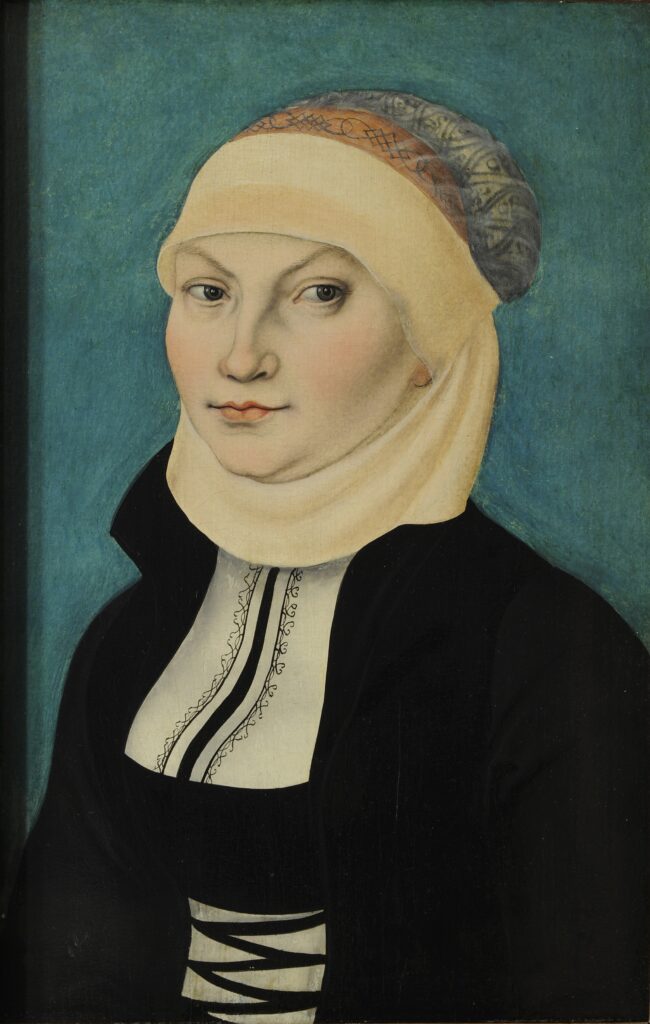
And finally I will lift up Katharina von Bora. After escaping her Catholic Convent in a barrel train, she married Luther and helped define the modern Protestant parsonage. She managed the household finances, ran a farm, operated a brewery, and hosted constant theological debates at their home, directly shaping Protestant perspectives on marriage, family, and domestic life.
I would argue that without Katharina, Luther’s accomplishments would not be as great as they were. She managed Luther’s life during the Reformation. She was the cog in the wheel. Luther was able to speak and spread the word of the Reformation because of what Katharina was doing at home. As a Lutheran, I owe much to her contributions during that time frame.
So why don’t these women get the credit? Maybe they didn’t get to do the preaching and the debating that the male reformers did, but that is no fault of their own. They lived in a time when females voices were often muted and overlooked. The female place was not in front of a crowd, let alone in front of a church.
We must honor what these women did just as much as we need to honor the male reformers. Standing up for what you believed in against the church was a very dangerous thing. There were persecutions and death threats constantly during that time. And imagine the added weight of being “2nd rate citizen” doing the same things. The strength and devotion of these women is something we need to remember and recognize.
For centuries women have helped shape and form the church of today. I would not be the Christian I am today without the strong and courageous women of my life.
The teachers, care givers, church leaders, and pastors have all had an impact on the way I see the world.
I will be forever grateful to them, their sacrifice, and their willingness to fight for a brighter tomorrow.

By Stuie Lewis
For The Brookings Beacon