
Grace comes before commandments
November 4, 2026
By Stuie Lewis
For The Brookings Beacon
Have you ever noticed how many rules we have in life? There are rules at school, rules at work, rules on the highway, rules in our communities, rules in our homes and even rules in our churches. Some rules keep us safe. Some help us get along with one another. And some rules, if we are honest, can feel like nothing more than restrictions on what we want to do. Rules aren’t always fun, but for the most part they are necessary.
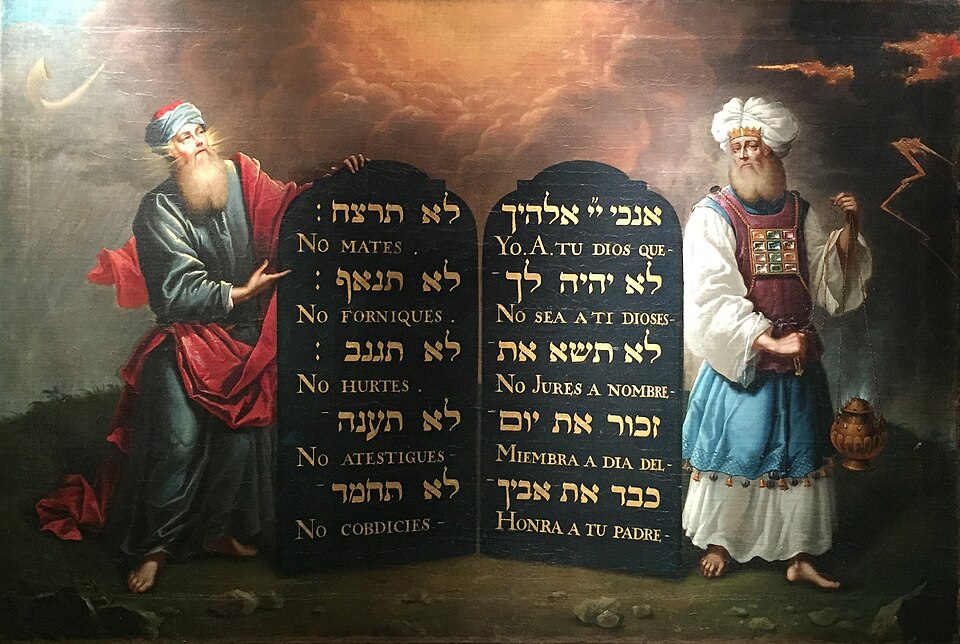
When we hear about the Ten Commandments, we might think of a list of things we are not allowed to do. We hopefully remember some of them from Sunday school or confirmation classes. We may picture Moses coming down the mountain carrying the stone tablets. And for the older generation, we picture Mel Brooks as Moses carrying the 15 Commandments until he drops one and says he just has ten from the movie History of the World Part 1.
But let’s look at the Ten Commandments in a different way. Are the Ten Commandments simply rules we must obey, or are they God’s gift to people whom God has already set free?
To answer that question, we need to look in Exodus 19, the chapter before we see the Ten Commandments. In Exodus 19, the Israelites have come out of Egypt. They have experienced slavery. They have lived under the power of Pharaoh. They have known hardship, fear, and oppression. For 400 years they dealt with the persecution.
But God has heard their cries. God has acted on their behalf. God has brought them out of slavery and led them toward freedom. They have crossed the Red Sea and have journeyed through the dessert. Now they arrive at Mount Sinai. Before God gives the Ten Commandments in Exodus 20, God reminds the people of what has already happened. In Exodus 20:2, God says: “I am the LORD your God, who brought you out of the land of Egypt, out of the house of slavery.”
Notice the order. God does not say, “If you obey these commandments perfectly, then I will rescue you.” God does not say, “Prove that you deserve freedom, and then I will become your God.” Instead, God says, in effect, “I have already rescued you. I have already brought you out of slavery. Now I am teaching you how to live as my people.” That order matters.
God’s grace comes first. God’s saving action comes first. The commandments follow as a way for God’s people to live in the freedom God has given them.
We do not earn God’s love by following the commandments. We do not earn salvation by being good enough. We are saved by God’s grace through faith in Jesus Christ.
And because God has loved us, forgiven us, and claimed us, we are called to live in ways that reflect God’s love. The commandments are not a ladder we climb to reach God.
They are a gift that helps us live faithfully with God and with one another.
God’s grace coming first takes the burden of perfection off our shoulders. It gives us the chance at a second chance to do better. It’s God telling us that failure is okay, and expected. It gives us the opportunity to live life not in fear, but in adoration for the one great enough to save us, even on the days that we don’t deserve it.
Thanks be to God for that.

By Stuie Lewis
For The Brookings Beacon