
Needle drops & Nightcaps: E. Janet Johnson
November 17, 2026
By Toby Kane
For The Brookings Beacon
In the 18th century, Stewball was a wildly successful racehorse rumored to only drinkwine, never water.
introduced me to the popular folk song of the same name, most notably performed by Peter, Paul and Mary.
Today, in Needle Drops and Nightcaps, we drink water. But we’re still raising a glass to some great albums and Stewball.
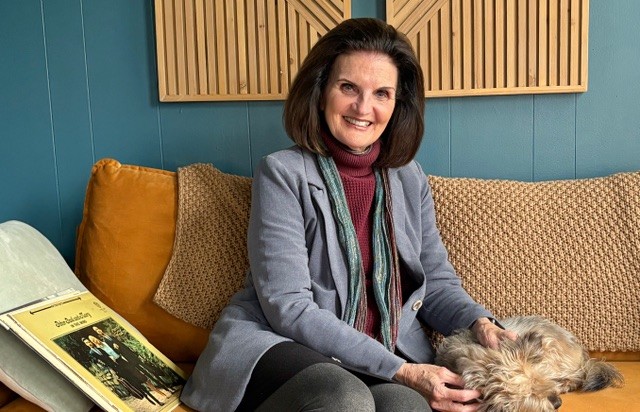
Janet is a retired South Dakota State University professor, poet and public speaker.
She enjoys writing books and is a member of the South Dakota State Poetry Society, aswell as a fellow
Toastmaster.
I dig her.
Janet has a history colorful enough for seven or eight lives. Much of it is rooted in folk music.
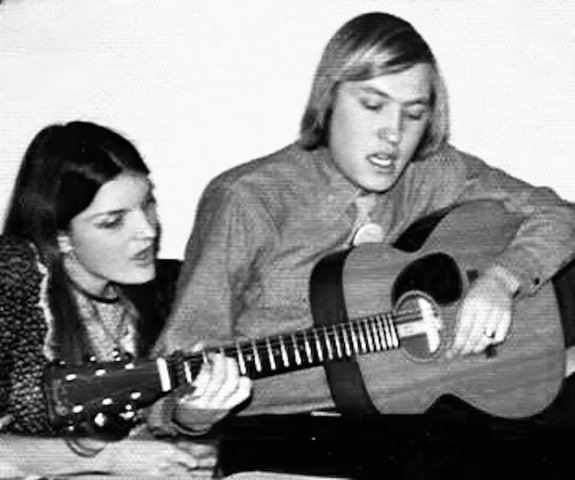
She and her husband, Carter, often strummed American tunes to the delight of Russian locals during their 11 trips to the USSR.
He was a scientist. She was an educator. Both dressed in blue jeans while traveling for work and playing music they loved.
“We knew just six chords,” says Janet. “The power of music is universal.”
Russians went crazy for it. They were transfixed, yet struggled to understand these aliens who were academics and musicians. They loved the songs but were naturally prone to skepticism. The reactions from locals followed a similar pattern.
Wait! You’re a scientist?
Wait! You’re a teacher?
Wait! You must be famous.
Wait! Play that again.
In 2026, It’s easy to forget that Russia had very stringent rules on travel into or out of the country. Creativity was suspect. Art had to be state-approved. You had to be of a certain age or stature to be granted access to travel internationally. That was life in the Motherland.
But good music typically stands a chance of breaking through all that.
One Russian friend asked Janet if she would bring them a Bob Dylan album when she came back. True to her word, she did.
Janet and Carter travelled to Russia for serious purposes. They also had long hair, bell bottoms of the day and a shared guitar at their side.
Carter is left-handed, so he turned the guitar upside down and restrung it backwards to play as he naturally felt. Janet is right-handed, but learned to play it left-handed because it worked well with her hand strength and it just became normal.
What wasn’t normal to Janet was the unexpected feeling she had during a jeep ride climbing the Caucasus Mountains.
She was both surprised and emotional when she heard the driver’s pirated tape of Carole King leap out of the speakers.
The Greatest Feeling
“I really didn’t expect to be so moved by that,” says Janet. “As someone who’s traveled a lot of places, it made me miss home in the moment.”
Great songs always provide moments.
We get to our album choices and listen to “You’ve Got a Friend” from “Tapestry” by Carole King.
The history of the song, as with most folk music, is somewhat complicated. Carole King recorded it. Her friend James Taylor did, too, in the same session, and calls it the greatest song ever written by a human.
King won a Grammy for Song of the Year and Taylor earned a Grammy for Best Male Pop Vocal Performance.
As just a baby at the end of the hippie movement, I admit I’m a bit undereducated on the significance of that time.
Listening to Janet, it’s clear there was real pain and release in that fusion of music, politics and protest. It was deeply emotional as the draft loomed overhead and the civil rights movement bubbled to the surface.
Janet wasn’t traveling around the country protesting all the time. She and Carter were on the straight and narrow at Augustana College.
They each had strong feelings about the Vietnam War, civil rights, social issues and the state of the world, but played them close to the vest.
The Wind Takes Her to Washington
In her youth, Janet had bounced around between parsonages as the daughter of a preacher. That experience brought her many wild adventures, including a family trip to the March on Washington in 1963.
We unsleeve Peter, Paul and Mary’s “In the Wind” and Janet points to the album photograph, identifying the exact spot where she stood as Peter, Paul and Mary performed for the demonstration.
Bob Dylan penned “Blowin’ in the Wind” but it was Peter, Paul and Mary’s version that largely put the song in the consciousness of the time. Janet watched the live performance in the shadow of the Washington Monument.
“People were protesting the times, for sure,“ says Janet. “But I had never seen so much happiness, harmony and joy. It sounds cliché I know. But it’s true.”
Roughly 75 percent of the 250,000 demonstrators were Black. Janet didn’t notice being in the minority.
“When my dad drove us out of the crowd toward home, people were smiling, blowing us kisses and waving.”
As the country faced concerns about being drafted into war, racial strife and rebelled against the rigidity of the times, I ask her about the hippie-ish lyric: “The answers are blowing in the wind.”
“I think it’s an ongoing problem for every generation,” says Janet. “The answers may be out there blowing in the wind.”
“But will we catch them?”
Dylan Makes Waves
Bob Dylan performed front and center at the March on Washington.
Janet pulls out “Planet Waves”, which she admits is not her favorite Dylan album. The record finds Dylan in a high-profile reunion with The Band, on a new label and with his first number one album in the U.S.
The tracks take a few twists and turns as well. Side one ends with a slower acoustic version of “Forever Young” while side two begins with an upbeat, full-band version of the same song.
Keeping track of which folk artist did what version of whose song in those days must have been maddening.
“Forever Young” is unusually straightforward for Dylan, a song inspired by his oldest son.
It’s lyrically simple and even a little sentimental. The side one version with its intimacy and slow pacing resonate more with Janet.
“I think he just did the faster version because he was afraid people would think he had gone soft.”
We pause for the final verse.
May your hands always be busy
May your feet always be swift
May you have a strong foundation
When the winds of changes shift
May your heart always be joyful
May your song always be sung
And may you stay forever young
May you stay forever young
“I like the sentiment. What young people sometimes don’t get about older people is that we feel young inside,” says Janet. “My mom always said age is timeless. I try to live that way.”
We wrap up talking about some of the music her sons listened to: Nine Inch Nails, Smashing Pumpkins and U2’s pending album and tour.
Forever young, indeed.